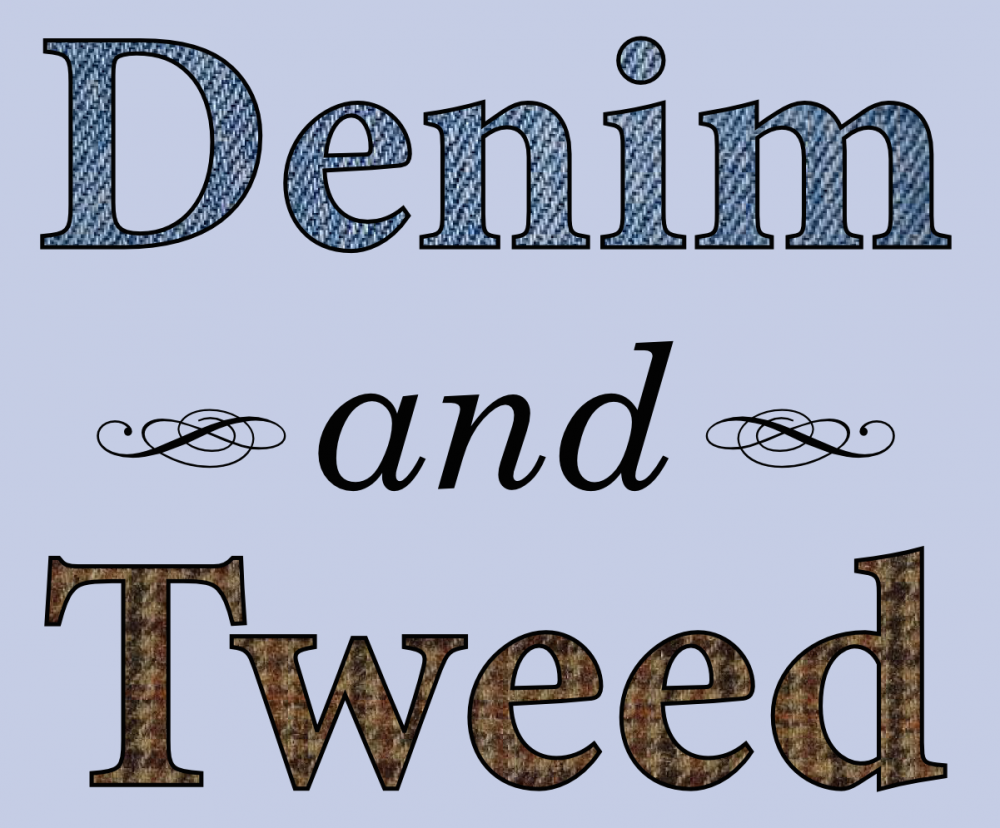
My new album

It’s the joke Dave Barry ran into the ground – just about any random word or phrase makes a convincing band name – but it was still entertaining to do it.

I’m thinking Danger Zone probably sounds suspiciously like U2.

Meme instructions follow:
1) Your album cover is the third image on this page. 2) Your band name is the article title at the top of this page. 3) Your album title is the last 4 or 5 words from the last quote on this page. [I’ve changed the Flickr link to bring up only images licensed under Creative Commons.]

Via Bill Corbett, who is, apparently, starting a cover band called “Burgess.”

Posted in Uncategorized | Tagged

Parasites like their hosts clustered

ResearchBlogging.orgIn epidemiology the importance of ecological and evolutionary processes comes into sharp relief: questions about the networks of interactions between species in a community, or about the evolution of parasite specificity, virulence, and contagiousness have immediate implications for human health, as well as in animal husbandry and conservation. One of the most basic of these questions is, what determines the community of parasites that infect a species? One answer is in this month’s issue of The American Naturalist, where a neat meta-analysis shows that the size of mammals’ home ranges shapes the number of parasite species they attract [$-a].


A tapeworm parasitic worm
Photo by pinkcigarette.

For mammals, we already know that parasite communities are shaped by the host’s body size, geographical range, and population density. In this new study, Bordes et al. propose another factor: the host’s home range, the area that a single individual occupies. There are two major ways that home range might shape the diversity of parasites infecting host. Greater home range could mean that the host encounters a broader array of habitats, and opportunities for infection, so that home range and parasite diversity are positively correlated. Alternatively, hosts with smaller home ranges effectively live at higher density, which should create more opportunities for parasite transmission between hosts, generating a negative correlation between home range and parasite diversity.

Bordes et al. test these hypotheses by collecting published studies of the number of parasitic worm (helminth) species infecting mammals, and then performing regressions (corrected for phylogenetic relationships between host species) of parasite species richness on a variety of possible causal factors, including home range. They find that host home range is a stronger predictor of parasite species diversity than host body size, and that home range is negatively correlated with parasite diversity.

In a way, then, this result confirms the importance of host density in host-parasite interactions. But it’s not an obvious outcome – it is intuitive that more densely populated hosts should be more susceptible to parasitism in general, but not that they should also be attacked by a wider array of parasites. Maybe dense host populations are more productive habitat to parasites, so that there’s ecological “space” to support a greater diversity of parasites. Or maybe these dynamics are a result of the specific biology of helminth parasites, many of which have different hosts for different parts of their life cycle.

Reference

F. Bordes, S. Morand, D.A. Kelt, D.H. Van Vuren (2009). Home range and parasite diversity in mammals The American Naturalist, 173 (4), 467-74 DOI: 10.1086/597227

Correlation, and causation

I’m in the middle of grading an exam with a question that touches on this principle. If only I’d had this for the review session …

Open access on the line: H.R.801

A bill presently under consideration by the House Judiciary Committee would end the National Institutes of Health open access policy – which requires NIH-funded research to be made freely available to the public 12 months after publication – and ban other federal funding agencies from enacting similar measures.

This is, of course, primarily for the benefit of scientific publishers, who rely on subscription and online access fees as a major source of income. But it means that taxpayer-funded research would be inaccessible to members of the public who don’t benefit from institutional subscriptions. How we fund scientific publishing in the Internet Age is a tricky question – but legal fiat is not a good way to negotiate that question. Contact your representatives, and tell them to vote “no” on H.R. 801.

Via OpenCongress. See also coverage on Greg Laden’s blog.

Big tent atheism?

In a guest post on BoingBoing, Paul Spinrad proposes big tent atheism as an alternative to the absolutism of “New Atheists” like Richard Dawkins and Christopher Hitchens, who, he argues, may not be more interested in asserting their own superiority than making a convincing case:

Any successful new belief system must appreciate the beauty of what it’s replacing and strive for backwards-compatibility. If Matthew 1:1-16 hadn’t explained how Jesus’ lineage fulfills the prophecy in Isaiah 1:1-5, it wouldn’t have gotten where it is today.

So I put it to declared atheists– the ones who fly the flag about it, not the ones who are quiet or closeted: Do you think that most of humanity is A) hopeless and doomed to kill each other because of their stupid religious beliefs, or B) capable of coming to and benefiting from your views?

Posted in Uncategorized | Tagged

On overreacting

Crime is on the rise in Bathsheba Monk’s Allentown, PA, neighborhood. So, as she recounts in the New York Times Magazine, she got herself a gun.

Then finally I picked out a Smith & Wesson .357 Magnum, “the gun I started with,” the clerk said. I handed him my driver’s license and filled out the paperwork. He left us to run my license number through a criminal-records system called QuickCheck. Two minutes later I was qualified and, between gun and ammo, $762 poorer.


Photo by xtylerclub.

The brief story arc is sadly conventional. Rumors, then first-hand accounts of burglary spark rising fear in the household; Monk conquers her (very minimal) reservations with a trip to the firing range and finally makes the purchase. But it’s remarkable for what it leaves out: any consideration of efficacy.

How does owning a gun prevent a burglary? It doesn’t. Potential burglars cannot smell a gun secreted in the bedside table, and bypass the house because of it. At best, a gun can only make a burglary unpleasant for the burglar once he’s in the house – and then only if the homeowner is (1) at home, (2) lucky enough to catch the burglar off guard, (3) a good shot. Against this incremental gain in “security” – the ability to retaliate violently in the event of a home invasion – are the increased risk to children in a gun-owning household, and the chance that the gun itself could be stolen. Which – though they may be minuscule – are not mentioned, much less weighed.

So Monk’s piece is a snapshot of a sadly American line of reasoning, or rather lack thereof: a Pavlovian resort to arms in the face of fear. Monk hasn’t bought herself security so much as a deadly security blanket.

Posted in Uncategorized | Tagged

Endless forms most beautiful

Via Unreasonable faith, from Life in the Undergrowth, which I may have to rent.

Milkweed’s bitter arms race against herbivores

ResearchBlogging.orgPlants are locked in a long twilight struggle with herbivores, particularly insects – sometimes they evolve a new defensive mechanism, “escaping” to diversify into new groups [$-a], but mostly natural selection works with the traits they already have. That means arms races – plants evolving greater concentrations of defense chemicals, and herbivores evolving greater tolerance of those chemicals. In this month’s Evolution, a new study of defensive chemistry evolution in milkweed [$-a] documents exactly this process.


Asclepias viridis, a milkweed
Photo by gravitywave.

The study by Agrawal et al. follows up on earlier work in the same group, which established the evolutionary relationships between the members of the milkweed genus, Asclepias. Milkweeds are named for their defense against insect herbivores, a milky sap full of nasty chemicals – coumaric acids, caffeic acids, cardenolides, and flavonoids. The authors raised a large sample of milkweed species in a controlled environment, then measured the levels of these chemicals in each species. By mapping the chemical profiles onto the previously-developed phylogeny of Asclepias, they could estimate how milkweeds’ chemistry has evolved since the genus first arose.


Aphids on Asclepias
Photo by aroid.

This analysis revealed that milkweeds have gotten nastier over their evolutionary history. But it’s not that clear-cut: the diversity of defensive chemicals present in Asclepias decreased, even as the total production increased – so the plants seemed to be paring down an initial diversity of defenses into a few chemicals that worked especially well. Coumaric and caffeic acids, which are produced from the same biochemical precursors, forced a trade-off so that as one increased, the other decreased. On the other hand, cardenolides and flavonoids, which are both produced in another biochemical pathway, were positively associated.

If this sounds complicated, that’s because it is. As Agrawal and his coauthors point out, we actually don’t have a good sense at what timescale an arms race should manifest – that is, are we talking about plants evolving greater defenses over a few generations, or over millions of years, as this study? Natural selection can appear to be moving a population strongly in one direction for a year or two – and then turn out to be fluctuating all over the place [$-a] if you watch for decades. How year-to-year selection acting on multiple traits translates into the grand trends of evolution – whether the explosive diversification of flowering plants or the emergence of human intelligence – remains one of the big puzzles for those of us who study the living world.

Reference

A.A. Agrawal, J.-P. Salminen, M. Fishbein (2009). Phylogenetic trends in phenolic metabolism of milkweeds (Asclepias): Evidence for escalation. Evolution, 63 (3), 663-73 DOI: 10.1111/j.1558-5646.2008.00573.x

P.R. Ehrlich, P.H. Raven (1964). Butterflies and plants: a study in coevolution Evolution, 18, 586-608 DOI: http://www.jstor.org/pss/2406212

P.R. Grant, B.R. Grant (2002). Unpredictable evolution in a 30-Year study of Darwin’s finches Science, 296 (5568), 707-11 DOI: 10.1126/science.1070315

File under “wish I’d thought of that”

Charles Darwin’s diary from his time as ship’s naturalist aboard the H.M.S. Beagle, now in convenient blog form. Chuck is also twittering intermittently, presumably by some kind of steampunk Victorian iPhone.

Cooperation from selfishness?

ResearchBlogging.orgThis week’s PNAS has another (open access!) paper taking a crack at the problem of how cooperation can evolve. The authors create a world where cooperation arises spontaneously in a population of selfish individuals by modeling a fundamental human drive: the desire for a good neighborhood.

Helbing and Yu set up a model world ruled by the Prisoner’s Dilemma, a common game theory scenario in which pairs of interacting individuals can choose to cooperate or not cooperate with each other. If both refuse to cooperate, neither gets anything; if one cooperates and the other doesn’t, the cheater gets a reward, but the cooperator pays a cost; if both cooperate, then they both get a smaller reward. If neither interactor can predict the other’s choice, the most sensible strategy is to just never cooperate – you make out pretty well when the other guy is silly enough to cooperate with you, and you’re no worse off than you started out if you both refuse to cooperate.

Previous models have made cooperation work in Prisoner’s Dilemma situations a few different ways. One way is to allow individuals to remember how they have treated each other over multiple iterations of the PD interaction, so that cheaters can be punished [$-a]; another is to let the game play out across space in such a way that cooperators can cluster together, so that they are more likely to interact with other cooperators [$-a].

Helbing and Yu’s model is a variation on the “spatial” flavor – individuals occupy cells in a grid, and interact with those in adjacent cells. Strictly speaking, it isn’t an evolutionary model (even though the authors describe it as such), because there doesn’t seem to be any inheritance of behavior from one generation to another; instead, individuals “learn” from their neighbors, imitating the ones who are most successful in terms of interaction rewards. There’s a random element to individual behavior, to approximate trial and error strategies. Perhaps most importantly, individuals can migrate across the grid, moving to adjacent unoccupied cells where they expect to find a greater reward.

Neither imitation nor migration alone allow cooperation to survive in this model world, but some interaction between the two does. This result holds, apparently, for a wide range of possible combinations of payoff conditions. For some conditions, the model will even allow cooperators to “invade” a world full of non-cooperators. The speed with which individuals can move across the grid – cooperators seeking other cooperators, and avoiding cheaters – is critical, say the authors. They call this “success-driven migration” – and it does seem to allow cooperation – though not altruism – to arise out of selfishness.

See also Wired Science’s coverage.

Reference

M. Doebeli, C. Hauert (2005). Models of cooperation based on the Prisoner’s Dilemma and the Snowdrift game Ecology Letters, 8 (7), 748-66 DOI: 10.1111/j.1461-0248.2005.00773.x

D. Helbing, W. Yu (2009). The outbreak of cooperation among success-driven individuals under noisy conditions PNAS DOI: 10.1073/pnas.0811503106

M.A. Nowak, R.M. May (1992). Evolutionary games and spatial chaos Nature, 359 (6398), 826-829 DOI: 10.1038/359826a0

R.L. Trivers (1971). The evolution of reciprocal altruism Quarterly Rev. Biol., 46, 35-57