Evolutionary merchandising, just in time for Darwin Day

I’ve never quite found a t-shirt design that speaks to me as a bio-nerd. Sure, there are tees out there that promote evolution (usually in opposition to creationism), or science in general, and some are pretty awesome. But where’s the evolutionary biology equivalent of the infinite in-jokes for computer programmers, say? I haven’t seen ’em.

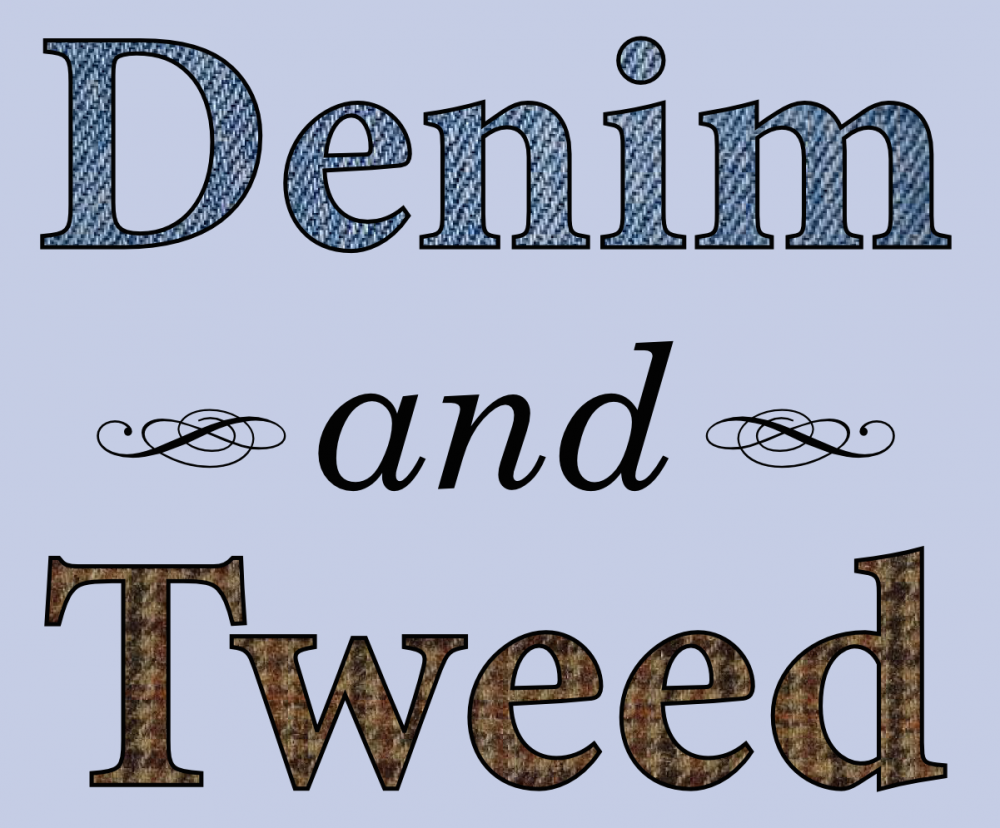
Here, then, are my first attempts to fill this minuscule hole in the market, two designs capturing the twin evolutionary forces of natural selection and genetic drift. Design by me, printing by Spreadshirt. I’ve ordered my own copies of the two pictured here, and they’re great – stylish, comfortable American Apparel tees with clean, bright printing. More options are at my new Spreadshirt store Denim & Tees, or you can work up your own in Spreadshirt’s nifty online designer.

Natural selection and speciation, 150 years later

ResearchBlogging.orgScience kicks off the week of Darwin’s 200th with a special section devoted to the latest on speciation [$-a], the literal origin of species. It includes a new review by Dolph Schluter, discussing the role of natural selection speciation [$-a], which suggests a new way to think about selection creating reproductive isolation.

Schluter contrasts ecological speciation, in which reproductive isolation arises in the course of adaptation to different environments, “mutation-order” speciation – isolation arising by the accumulation of different genetic and morphological changes in the course of adaptation to the same (or the same kind of) environment. That is, natural selection can cause a population to split into two species if different parts of population are “solving” different ecological problems, or if they arrive at different “answers” to the same problem.

The mutation-order scenario makes sense, though it’s new to me. As an example, Schluter cites a recent study in Mimulus in which a mutation of the mitochondrial DNA in one population creates sterile males in hybridization with other populations [$-a]. He proposes that much mutation-order speciation occurs because of conflict between different levels of natural selection, as when “selfish genes” create reproductive incompatibilities in the course of spreading through a host population. This is a departure from what biologists usually consider speciation by natural selection, but Schluter makes an interesting point.

References

A.L. Case, J.H. Willis (2008). Hybrid male sterility in Mimulus (Phrymaceae) is associated with a geographically restricted mitochondrial rearrangement Evolution, 62 (5), 1026-39 DOI: 10.1111/j.1558-5646.2008.00360.x

D. Schluter (2009). Evidence for ecological speciation and its alternative Science, 323 (5915), 737-41 DOI: 10.1126/science.1160006

A. Sugden, C. Ash, B. Hanson, L. Zahn (2009). Happy birthday, Mr. Darwin Science, 323 (5915) DOI: 10.1126/science.323.5915.727

A limerick for Darwin’s 200th

Thursday is, of course, the 200th anniversary of Charles Darwin’s birth. To kick off a week of commemorations, symposia, and nerdy parties, I humbly submit a limerick:

The vicar, one Quite Reverend Darwin
Considered, whilst penning each sermon,
How he might have advanced,
Had he taken that chance
To go with the Beagle a-voyagin’.

(It is widely considered that Darwin, had he not taken an interest in natural history, would’ve ended up as a clergyman; see David Quamman’s excellent pocket biography, The Reluctant Mr. Darwin.)

Dear Senator, part II

Just found a follow-up email from Science Debate 2008, reporting that previously planned cuts to science funding in the still-under-debate economic stimulus bill have been reduced or withdrawn. Still no obvious coverage on ScienceDebate2008.com, which is frankly weird.

Dear Senator

Sheesh. Of course science is the first thing they try to cut from the pending stimulus bill. Text free for the taking to anyone who wants to pester their congresscritters – which you should, if you care about science in the U.S.

OK, so it gets a little melodramatic at the end there, but I’m trying for impact. Edit as you see fit – individualized letters are more likely to have an impact.

Dear Senator,

I’m a graduate student in biology at the University of Idaho, and I’m writing to ask that you support President Obama’s stimulus plan, with full funding for basic scientific research.

Science and technology – the fruits of basic scientific research funded by the National Science Foundation, National Institutes of Health, and other government scientific agencies – are responsible for half of all U.S. economic growth since World War II. Yet today, after years of virtually no increases in basic research funding, laboratories across the country are at risk of shutting down, with untold consequences for our long-term competitiveness in the global economy.

Basic research makes economic sense over the short term, too – with the increase in funding proposed in the stimulus bill, granting agencies would immediately be able to fund more of the grant requests they’re considering right now. That’s money to pay lab staff, and buy reagents and equipment – most often from American companies like Thermo Fisher and Qiagen.

For these reasons, the stimulus bill before the Senate originally contained vital increases in basic scientific research funding. Now, however, a group of senators, including Susan Collins and Ben Nelson, are proposing cuts to the stimulus bill that would eliminate much – and in the case of NSF, all – funding for science. Considering what a tiny portion of the bill’s proposed spending was already devoted to science funding, and the immediate and long-term value it would have brought our economy, this is a shortsighted idea at best.

So I hope you will give full support to President Obama’s stimulus bill, and reject the Collins-Nelson cuts in science funding. The scientific and economic future of our nation depend on this.

regards,
Jeremy B. Yoder

[I should also note that the talking points above come from an email sent out by Shawn Otto over the ScienceDebate2008 e-mail list; I can’t find coverage of this issue on the SD2008 site, however.]
Draft Neanderthal genome next week

ResearchBlogging.orgNature News reports that the first complete genome sequence for a Neanderthal will be released, appropriately enough, on next Thursday, the 12th of February, and the 200th anniversary of Charles Darwin’s birth. It’s the same group at the Max Planck Institute that released the first million bases of Neanderthal nuclear and mitochondrial DNA sequence [$-a] back in 2006. As in the earlier work, the new data were collected with a “454” next-generation DNA sequencer.

The earlier publication, which I just read this week as part of a reading group focused on next-generation sequencing technology, was more like a stunt than a groundbreaking result in evolutionary genetics. The actual results were two new estimates of the human/Neanderthal divergence times (basically confirming earlier estimates), and a coalescent estimate of the effective population size of the common ancestor, neither of which would be worth a whole paper, let alone a letter to Nature.

But it was pretty awesome just as a stunt – at every step of the analysis, the authors did some clever error checking by comparing the Neanderthal sequence to human and chimpanzee genomes, and they came up with actual nuclear sequence data from a freaking Neanderthal. Ahem. The collection of an entire Neanderthal genome is a big deal as a stunt, but I’ll look forward to seeing what new insight into human evolution comes out of it.

Reference

R.E. Green, J.Krause, S.E. Ptak, A.W. Briggs, M.T. Ronan, J.F. Simons, L. Du, M. Egholm, J.M. Rothberg, M. Paunovic, S. Pääbo (2006). Analysis of one million base pairs of Neanderthal DNA Nature, 444 (7117), 330-6 DOI: 10.1038/nature05336

Darwin’s Beagle diaries as audiobook

Darwin Online presents Charles Darwin’s diaries from his historic voyage on the H.M.S. Beagle in audiobook format, five files totaling about an hour and a quarter.

Evolution 2009: Evolution will be blogged

Evolution 2009ResearchBlogging.orgAn advantage of being in charge of the website for Evolution 2009, the joint annual convention of the American Society of Naturalists, Society of Systematic Biologists, and Society for the Study of Evolution: when I suggest that we ought to do something to involve science bloggers in the conference, I get to set it up. Or maybe that’s actually a disadvantage.

In any event, we’re experimenting with a blogswarm for this year’s conference – if you’re attending the conference and think you’d like to ‘blog about it, or just want to help spread the word, head over to the just-posted blogging page, download a badge to put on your site (see my sidebar, and the inset on this post, for examples), and drop me an e-mail so I can add your URL to the list of participating science blogs. I’m also interested in suggestions, both conceptual and technical, for how to improve the resources at that page, which currently consist of a small selection of logo badges, and the list of participants – I’d particularly like to try aggregating relevant posts from participating blogs into a single RSS feed.

With blogging becoming more common as a way to educate the public and converse with other scientists, I hope this will improve Evolution’s profile outside academic biology and facilitate conversation among attendees before, during, and after the conference. Also, as a colleague (who shall remain nameless) pointed out, this should make it easier to organize the kegger.

Reference

S.A. Batts, N.J. Anthis, T.C. Smith (2008). Advancing science through conversations: Bridging the gap between blogs and the academy. PLoS Biology, 6 (9) DOI: 10.1371/journal.pbio.0060240

Science, blogged

Another example of how blogging can be great for science, both as public education and as communication among scientists: The Open Source Paleontologist Andrew Farke first walks his readers through his nifty new study of skull injuries in Triceratops, which suggests that their horns were used for combat (as opposed to mere display), then follows up with a post detailing the open-source technologies behind the paper.

This is better, to my mind, than whatever coverage the New York Times science section can give Farke’s result. Farke links directly to the PLoS-published paper – mainstream science coverage tells me the journal, at best, and leaves me to ferret out the paper myself. (It’s not that much work, but I’m lazy.) I can read the author’s own explanation of the result, and post comments to ask for clarification, which better approximates the experience at a conference. And, as a bonus, I learn about some ways I can improve my own, very non-paleontological, work: Zotero, for instance, looks well worth a try.